Friday, January 16, 2015

Photos on Friday: Eisenhower Executive Office Building

Today's Photos on Friday takes us back downtown to a building I would love, love to get a look at inside, but alas it is not open to the public (far as I know -any tour related information I find seems to be outdated). 

The Eisenhower Executive Office Building (formerly known as the "Old Executive Building") is French Second Empire style and was completed in 1888 after 17 years of construction. It was built to house the State, War and Navy Departments. Today, it primarily houses White House staff.

Here is a glimpse of this incredibly large and beautiful building. 
Eisenhower Executive Office Building

If the inside, which I have heard is stunning from someone I know who has been inside, is as beautiful as the outside, it must really be something to see. However, this building is not open to the public but visitors can walk by and see it as it is located right next to the White HouseThe EEOB is located at 1650 Pennsylvania Avenue Northwest, Washington, D.C. 20502.

Thursday, January 15, 2015

Guide to the National Cherry Blossom Festival

Each year Washington D.C. hosts the annual National Cherry Blossom Festival. The festival lasts two weeks and is one of Washington D.C.'s most popular spring events. It usually begins around the end of March and continues for two weeks. Although in previous years, dates and length of festival have sometimes varied. Every year millions of visitors flock to D.C. to see the blossoms.


This post is more of a generic piece to provide information, I'll be posting updates and specifics to this year's festival as we get closer to the festival date. I know it's only January, but I'm already excited! The blossoms' appearance is, hands down, one of my favorite events of the year.

History of the National Cherry Blossom Festival


The event is one that offers a tribute to the commemoration of 3,000 cherry trees gifted to the United States from Toyko's Mayor Yukio Ozaki in 1912. This exquisite gift offered just after the turn of the 20th century was given as a way to honor the ongoing friendship between the US and Japan.

Today's annual festival serves as a memento and celebration to the continued alliance and closeness between the two nations.

About the festival


Visitors to the city can admire and take pictures of the pink blossoms scattered along the Potomac River and throughout the grassy areas around the perimeter of the National Mall. The sight of the thousands of blossoms is nothing short of extraordinary and the striking view of these budding flowers on the trees is breathtakingly beautiful. As you walk through the Tidal Basin, there is often a pink blanket of petals on the water that is beautiful too.


During the course of the festival there are daily events, performances and activities presented; the daily schedule includes fun for the whole family (for the kids there are usually crafts too). Each year the festival features a parade on one weekend, and the following weekend the festival concludes with a display of fireworks.

The cherry blossom festival is an event that has developed into a top tourist attraction as millions come every year to see these amazing blossoms. If you do plan to visit Washington D.C. during the weeks of the Cherry Blossom Festival, you should be aware, there is usually a big crowd and you should plan accordingly.


Planning your trip


Being it is a busy time to visit, due to the crowds, you'll want to book your accommodations and any tours ahead of time to ensure you get the reservations you want. Additionally, since so many people are in town, the museums tend to be packed more than usual (and usual is already pretty crowded on weekends for the more popular museums!). As you plan your itinerary, you may want to plan some of your attraction visits for earlier in the day before it gets too crowded and you spend most of your day in lines.

Getting around Washington D.C.


During the Cherry Blossom Festival, parking may be difficult and the Metro is packed during the festival weeks. The trains often have standing room only, but the good news is the Metro moves swiftly and is almost always on schedule; they seem to plan well for big events such as the National Cherry Blossom Festival.

If you drive into Washington D.C., while chances are parking is slim pickings, if any at all, near the festival area, you may be able to find parking over at Union Station (which will cost you). This is a hike from the Cherry Blossom festivities, but a short Metro trip from Union Station (take the Red Line to the Orange Line and get off at the Smithsonian Station) will get you down within walking distance to the Cherry Blossom Festival.

The locals tend to avoid the weekend festivities and head into D.C. on the weekdays to appreciate the cherry blossoms. If you are staying in Maryland or Northern Virginia, you may want to consider weekdays as a possible option if you don't like the heavy crowds. I have been doing this myself the last few years - it's still pretty busy, but not as hectic as it is on the weekends. Last year I went down later in the afternoon on a weekday and caught the sun beginning to set over the Tidal Basin as I completed my walk around.


The annual National Cherry Blossom Festival is a great event. If you happen to be in the area, or even if you live in the D.C. Metro area, the blossoms are worthy of a visit at least once. For more information on the Cherry Blossom Festival, you can visit the official website for more information.


Tuesday, January 13, 2015

Tips for budget sightseeing in Washington D.C.


Things to see in the Washington, DC area without breaking the bank...


Like most major cities, traveling to Washington, D.C. can typically can get very expensive if you don't watch your spending. However, when visiting the U.S. Capital, you don't have to necessarily break the bank to have a good time. There are many places, activities and events to enjoy in the district that can fit your budget. 

Many things to do are even free!

While accommodations may be pricey, you can scale back in spending by carefully planning your sightseeing. In and about Washington, D.C.
has some terrific sightseeing, and much of it won't even cost you a dime, except perhaps a few bucks to ride the Metro


Washington, D.C. proper


In Washington, D.C., you'll find all the famous monuments, Smithsonian Museums and much more. The most this will cost you is the time it takes to walk around and view the breathtaking scenery. You'll see history, both the past and the future, in the making.

The National Mall sits in the heart of the District. The monuments and memorials are one of the first things many tourists have on their lists of things to see and do. Entry to all of the monuments is free, including visiting the top of the Washington Monument. I'd advise you secure tickets early in the day as these have a tendency to go quickly. Even better, book online (there is a small fee).

Gazing at the Washington Monument's reflection in the Tidal Basin

Nestled within the National Mall are the Washington Monument, Lincoln Memorial, Jefferson Memorial, FDR Memorial, Vietnam Veterans Memorial, Korean War Veterans Memorial and the newer, built in 2004, WWII Memorial. Also relatively new is the Martin Luther King, Jr. Memorial. A lesser-known monument, the District of Columbia War Memorial (WWI) also sits within the confines of the Mall.

One of Washington's most prominent attractions is the amazing architecture of many historical buildings. The U.S. Capitol Building, the hub of U.S. government, offers free tours, and guaranteed passes can be approved in advance. Reservations can be made online, however these tickets are limited per day. The White House is another can't miss landmark; however admission to the free self-guided tour also requires pre-planning. The Old Post Office is another wonderful, and free, landmark. Free tours are offered to see the views from the tower.

View of the city from the Old Post Office Tower - very cool!!

One of D.C.'s largest tourist attractions are the Smithsonian Museums. There are 19 museums in downtown Washington, and most of them are located near the Capitol Building. Visitors can enjoy the wealth of information and spectacular exhibits showcased in these museums. 

Most of the museums are pretty close in proximity to one another. The most popular museums are the Air and Space Museum, National Museum of American History and the Museum of Natural History. There are also many other less-known, but amazing, museums such as the Freer & Sackler Gallery, National Museum of the American Indian, National Museum of African Art, and the National Portrait Gallery. The newest museum, the National Museum of African-American History, opened in 2016.

In the National Museum of Natural History you can get up close and personal with the butterflies in the Butterfly Pavilion (the museum is free, but there is a fee to go into the Pavilion - Tuesdays are free)
Not part of the Smithsonian network, but a popular museum is Ford's Theatre and the house where President Lincoln passed on (across the street). Tours of these landmarks are offered at no charge and run by the National Parks Service who provide an interesting narrative and history as a part of selected tours. Before planning a visit to Ford's, be sure and learn how ticketing works as this has changed in the last few years, it's harder to get a walk in visit than it used to be. Also it is still very much a working theatre, and tours are closed during show times. 

In addition to the formal tours, another way to explore the nation's capital city is to simply walk through the neighborhoods, such as historic Georgetown.

Across the Potomac in Northern Virginia


Many of the Metro region's attractions are located in nearby Northern Virginia which is literally across the Potomac and very close in proximity to Washington D.C. While there are many attractions which span west and south of the district, two close Northern Virginia cities are Alexandria and Arlington which both connect into the Metro system.

The historic city of Alexandria is amazing. While the city was officially founded in 1749, the story of this city goes back further. Visitors can learn about this history through the free and inexpensive tours and landmarks located throughout Old Town Alexandria.


Most places in the northeast tend to quip "George Washington slept here" as their claim to fame, and perhaps he really did. Alexandria, Va., however, is truly a place George Washington indeed frequented, owned property, dined, worshipped and did business.

Many of the museum and landmark tours cost between $2 and $5 each, if not free. Visitors can learn less frequently heard stories and history when visiting Carlyle House, Christ Church, Fort Ward, Gadsby's Tavern, Torpedo Factory, Old Presbyterian Meeting House, Lyceum, Friendship Firehouse, Freedom House Museum, and the amazing Stabler-Leadbeater Apothecary Museum. These are only a handful of the affordable places that await in Alexandria.

Interior of the Stabler-Leadbeater Apothecary - amazing!!

Arlington Cemetery, located across the Potomac from Washington D.C., is the hallowed ground where our brave heroes are buried. While visitors are welcomed, it is important to respect the fact funerals are taking place and people are visiting the graves of their loved ones. Visitors can view the Changing of the Guards at the Tomb of the Unknown Soldier and visit Arlington House, the former home of General Robert E. Lee. The Arlington Cemetery's visitor website has a list of the places visitors can see when visiting the Cemetery.

Washington D.C. is considered an expensive city, however most of the expenses when visiting the region are related to accommodations and food. While it is true there are also expensive tours for other attractions, if you know where to look, sightseeing with self or (some) guided tours in the district area can be free or close to free. 


Monday, January 12, 2015

Beautiful architecture in Old Town Alexandria

Old Town Alexandria possesses a special charm and whether you're a history buff, architectural buff or even a shopping enthusiast, this historic district has a lot to offer visitors. 

One of the neat aspects of Alexandria's charm is the beautiful architecture that still stands after centuries. When walking around the Old Town section of the city I never bore of examining the old buildings, whether they are now museums, commercial businesses or private residences.


Here are a few shots I've taken over the years during visits to Old Town Alexandria.

This photo is the steeple of Christ Church.

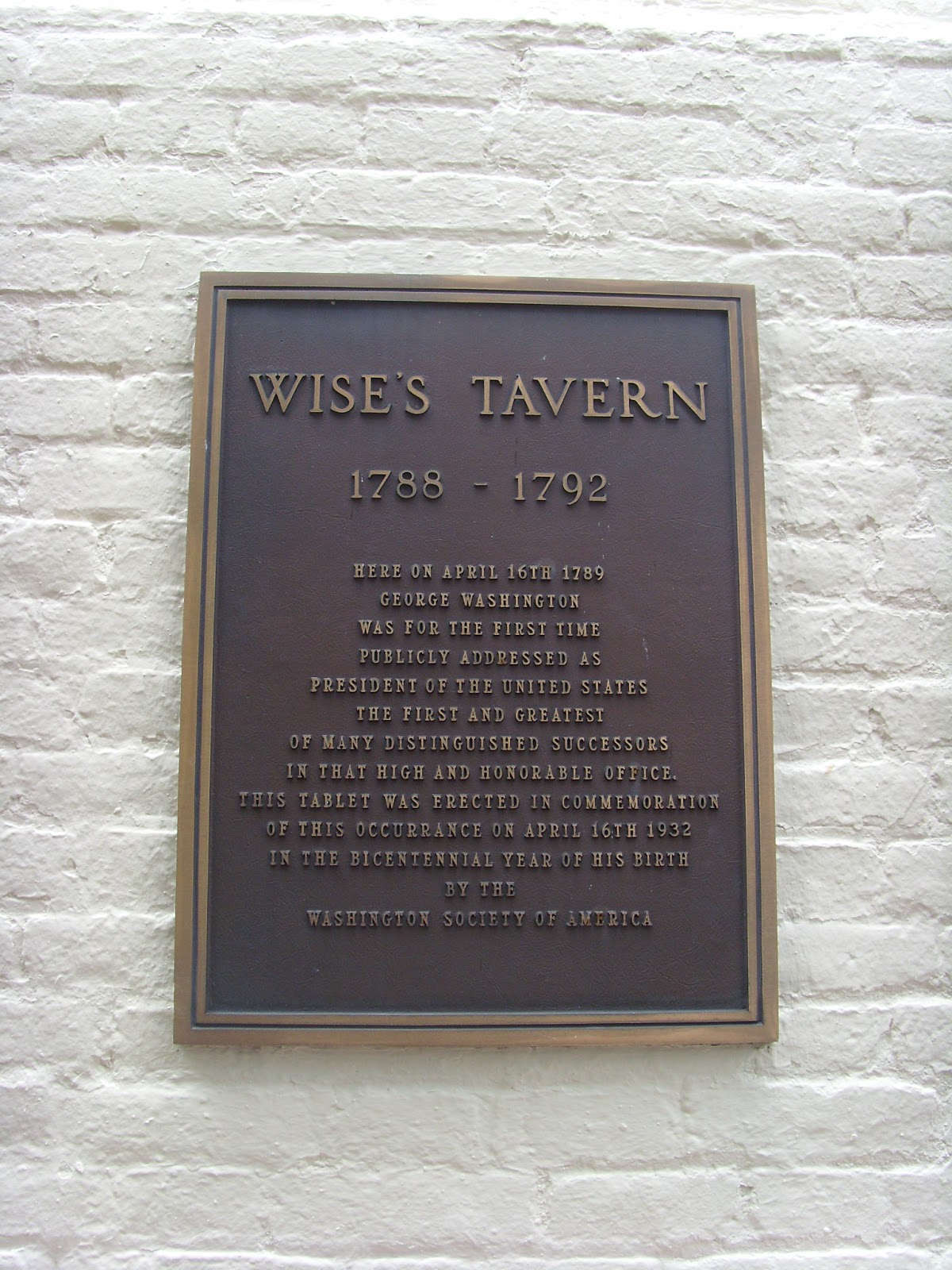
Wise's Tavern is the location where George Washington was first addressed as "Mr. President". Alexandria was the first of many cities the newly-elected President Washington stopped on his way to New York to deliver his inaugural address.  


The next few shots are random shots which, unfortunately, for some of them I don't recall the name and/or historical significance of each structure. These were buildings I took photos of when walking around Old Town, most are private residences.   


John Douglass Brown home, currently a private residence


The following photo is of the famous Carlyle House. Hard to imagine just a few decades ago this structure was in serious disrepair and dilapidated before it was rescued and preserved. To read more about this grand home and its history and to see pictures of the interior I invite you to please visit my blog post on this grand home.

Carlyle House
An old torpedo factory now turned into an art center

Lee Fendall House

Alexandria is an old city rich with history and full of interesting places to see and explore. If you're ever in Northern Virginia and are looking for something to do, I'd highly recommend checking out Old Town. (There is also lots to see and do in other neighborhoods, but I'm still working my way around!)